What to Expect from a Movement Matters School Session
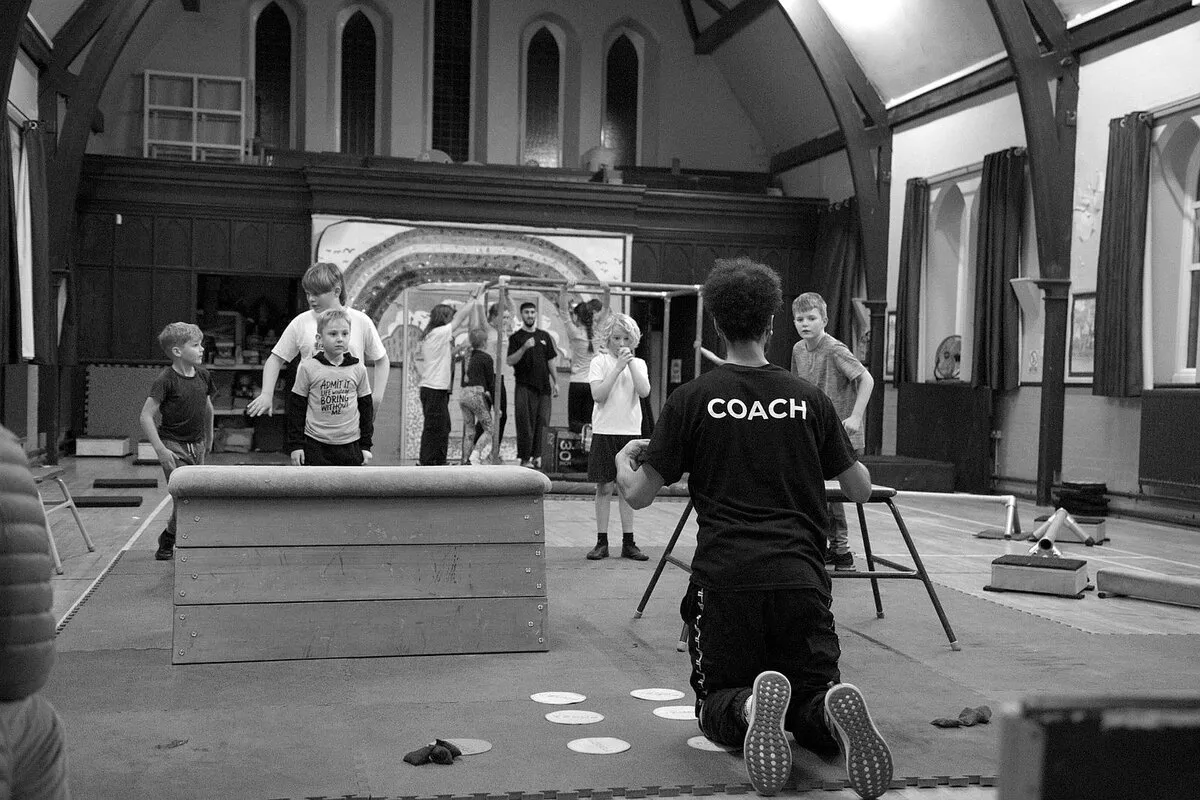
Schools considering a Parkour programme often have a simple question: what actually happens in a session? It is a fair question. Parkour carries a cultural image that does not always match the reality of structured, coach-led delivery in a school hall or sports space.
This is what a Movement Matters session looks like from start to finish.
Setup and equipment
We bring everything. Vaulting boxes, bars, balance beams, mats, stepping blocks. Our coaches arrive in advance to set up a circuit that is appropriate for the age group, space, and ability range of the class. Schools do not need specialist equipment or facilities. A standard hall, sports hall, or outdoor hard surface works.
The setup is designed to create multiple stations operating simultaneously. That means every pupil is active for most of the session, rather than queuing or waiting for their turn.
The warm-up
Sessions open with a structured movement warm-up that serves two purposes. First, it prepares the body, raising heart rate, mobilising joints, activating the muscles pupils will be using. Second, it sets the tone of the session. Energy, engagement, and expectation all get established in the first five minutes.
Our coaches run the warm-up in a way that is accessible to all ability levels. Pupils who struggle with coordination, confidence, or physical literacy can participate without feeling exposed. The warm-up is social and energetic without being competitive.
Skills introduction
Before pupils move to the circuit, coaches introduce the key movements for the session. This might be a precision landing, a safety roll, a specific vault technique, or a balance progression. The demonstration is clear, the safety points are explained, and pupils get a chance to ask questions.
This part of the session builds Parkour literacy. Over time, pupils develop a vocabulary of movement skills that they can combine and apply in different contexts. It also gives them something concrete to work on, a specific skill to improve, not just an instruction to go and be active.
Circuit work
The majority of session time is spent on the circuit. Pupils rotate through stations that challenge different aspects of movement, strength, balance, coordination, spatial awareness, and controlled risk-taking. Coaches circulate, provide technique feedback, offer progressions for pupils who are ready, and adaptations for those who need them.
The atmosphere in a well-run circuit is noticeably different from a conventional PE lesson. Because the challenge is personal rather than comparative, there is less pressure and more genuine engagement. Pupils push themselves rather than competing against each other.
Cool-down and reflection
Sessions end with a structured cool-down and a brief reflection. Coaches acknowledge what the group achieved, highlight moments of individual progress, and invite pupils to name one thing they want to work on next time. That reflection matters. It builds a growth mindset around movement that extends beyond the session itself.
What teachers observe
Teaching staff who watch our sessions regularly comment on the same things. Pupils who are typically disruptive are focused. Pupils who avoid participation in PE are trying. The room has energy but not chaos. By the end, pupils are tired in the right way, physically spent but mentally settled.
That post-session state is one of the reasons schools book us repeatedly. Pupils return to class more ready to learn. The movement has done something useful.
If you want to book a session for your school or find out more about what we deliver, get in touch here. You can also explore our full schools programme or read about how Parkour fits into the national curriculum.