Parkour and Mental Health: Why the BBC Article Rings True
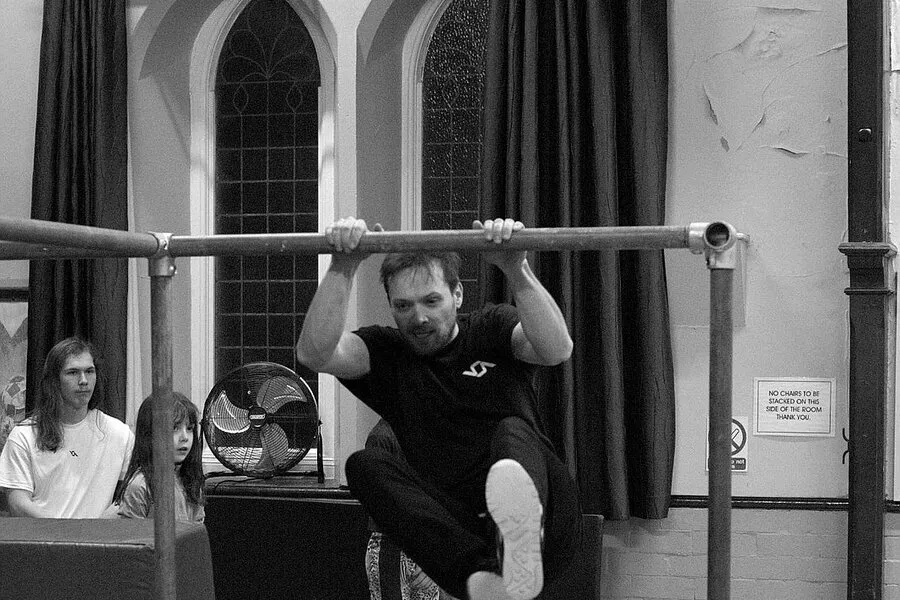
The BBC recently published a piece by Bea Swallow titled Parkour athletes say the sport boosts mental health. It features Danny Pierce, a friend and someone whose approach to movement I have a lot of respect for. The article captures something many of us in Parkour have known for years but struggled to put into mainstream language.
Parkour gets framed as spectacle. Big jumps. Big risk. Big noise. But the reality is quieter than that. For a lot of people, Parkour is the thing that helps them feel present, capable, and connected again. It is movement with meaning.
Parkour athletes say the sport boosts mental health
Featuring Danny Pierce, Charlotte Boenigk of Esprit Concrete, and Emma Brech of Bristol Mind on how Parkour supports mental wellbeing through presence, problem solving, and personal progression.
Read the original articleSmall wins that stack up
Danny puts it simply. "You realise your potential is so much more than you previously thought."
That is not a motivational poster. That is the lived experience of training. Parkour gives you a loop you can return to when everything else feels difficult. See a challenge. Break it down. Try. Adjust. Try again. Succeed.
A new landing. A steadier balance. A fear that feels slightly smaller than it did last week. Those things accumulate. Over time, people start to trust themselves again. Not because someone told them they should, but because they proved it to themselves on a rail or a wall or a vault.
Danny also talks about being drawn to movement from a young age and doing things that felt scary but still within his ability. That idea matters. Parkour is not recklessness. It is choosing the right challenge for today and building the skill to meet it safely.
Present by necessity
The article includes Charlotte Boenigk, founder of Esprit Concrete and Free Your Instinct, describing Parkour as "a way to move more mindfully, connecting mind, body and environment while reducing anxiety and overwhelm."
Anyone who has trained knows this. You cannot half show up to Parkour. Your attention has to be here. Feet. Hands. Breath. Surface. Distance. The present moment becomes the only place you can be. For anyone dealing with stress or anxious thinking, that focus can feel like relief.
Charlotte also talks about how "feelings of success and achievement trigger hope" and help people see that there are positive solutions to challenges. That is the Parkour effect in plain language. You learn that progress is possible.
Turning into difficulty
Emma Brech, chief executive of Bristol Mind, makes a point in the article that connects Parkour directly to therapeutic practice. "Therapy is often about turning into difficulty rather than denying it, avoiding it, or suppressing it." She frames Parkour as a structured physical outlet where people practise managing risk, problem solving, and overcoming barriers in how they see themselves.
That is powerful because it names Parkour for what it actually is. A training ground for life skills. Not because it is extreme, but because it is honest. You feel nerves. You learn to regulate. You make decisions. You listen to your body. You learn that you can do hard things without forcing or masking what you feel.
More accessible than most people think
The article notes that Parkour was officially recognised as a sport in the UK in 2017. It also highlights how accessible it can be for people of all capabilities.
That accessibility is one of the reasons Parkour supports wellbeing. It is not locked behind team selection, equipment costs, or being naturally sporty. It meets people where they are and rewards effort, consistency, and personal growth. As Danny puts it, "it is not about being competitive. It is about progressing at a personal level."
What we see every week
At Movement Matters, we see these same outcomes in schools and community sessions. Young people who struggle with traditional sport often thrive in Parkour. Not because it is easier, but because it is different.
It gives them autonomy. It gives them clear steps. It gives them a safe space to try, fail, laugh, reset, and try again. Confidence grows. Focus improves. Social connection builds naturally. And for many participants, that sense of belonging is just as important as the movement itself.
The BBC piece puts academic language and professional endorsement behind something our coaches witness every session. It is good to see that conversation happening in the mainstream.
And if you are a school, parent, or organisation exploring how structured Parkour delivery can support confidence and wellbeing, we would love to hear from you. Explore our community sessions or learn more about the team behind Movement Matters.